Hello, I’m Steve.
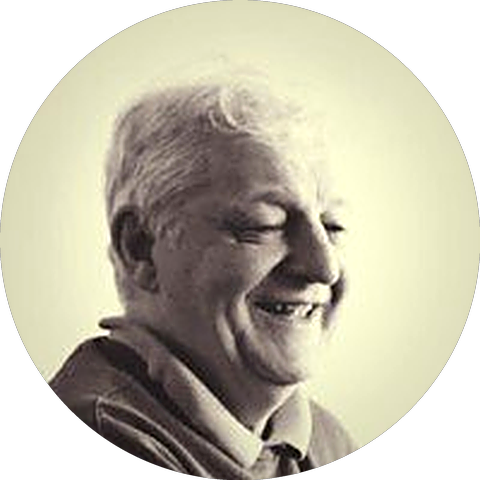
For many years my job took me around the world as a business and language consultant. I designed language training courses for organisations that couldn’t afford misunderstandings, and I spent a lot of time in rooms with people who knew plenty of English but didn’t yet feel safe using it.
That gap, between knowing a language and feeling able to speak it, is what I’ve worked on ever since.
Bankers who needed to be quick and exact
At Deutsche Bank, the atmosphere was intense. International banking runs on fast decisions, and there’s no room for vague English when money is moving. My job was to help people communicate quickly and precisely under pressure. What struck me was that the strongest speakers weren’t the ones with the biggest vocabulary. They were the ones who stayed calm enough to say exactly what they meant.
Builders heading to Egypt
Holzmann, the German construction company, was sending teams of builders to work in Egypt. On site, English would be the lingua franca between the German crews and their Egyptian colleagues. I built a special communication course just for them. These weren’t people who wanted grammar tables. They wanted to explain a problem on site, agree on a plan and share a joke at the end of the day. So that’s what we practised.
Air traffic controllers who wanted to relax
At Frankfurt International Airport, the air traffic controllers already had their technical English down perfectly. It’s a strict, precise vocabulary, and it works. But they asked me for something different: informal, conversational English. They wanted to be able to ease the tension when talking to pilots, to go beyond the jargon and sound like a person. I’ve written more about that experience on the blog, because it changed how I think about learning a language.
Station staff getting ready for a new arrival
Before the Channel Tunnel route opened, Eurostar staff at the Gare du Nord in Paris were preparing for a wave of English-speaking tourists. They needed a conversational style that was relaxed but still official, friendly without losing their professionalism. Getting that balance right is harder than it sounds, and it’s something every service job asks of people every day.
Alongside these, I also developed courses for the Frankfurt Exhibition Centre and Hewlett Packard.
What all of this taught me
Wherever I went, the same thing happened. People who were nervous spoke less, practised less and, understandably, improved less. People who felt confident had a go, made mistakes, recovered and got better quickly.
So my core belief is simple: confidence comes first, and the language follows naturally.
That doesn’t mean grammar and vocabulary don’t matter. They do. But they grow fastest when you’re actually using the language, and you only use it when you feel able to.
Why I built the speaking partners
The hardest part of learning to speak a language is finding someone to speak to. Classes are scheduled, friends get bored, and real conversations can feel too high-stakes for practice. So, through my company Chi~Flow Communication, I’ve built a set of AI speaking partners. They’re patient, available whenever you are, and they never sigh when you ask them to repeat something.
You can find them all on the Speaking Partners page.
Where I am now
I’m based in Manchester, UK. I write here about speaking with confidence, real-life phrases, and the stories I’ve collected along the way. If you’d like to talk about training for your team, or you just want to say hello, get in touch or find me on X at @chiflow.